On the nature of actions and intentions
There was an interesting discussion on the nature of human intention (to do an action) — more specifically the Ashʿarī position on this — on Facebook a few days ago. One of the contentions was the nature of our intentions — who really creates it? Some thought into it renders that anything other than Allah ﷻ has to come into existence through Allah ﷻ's will and power yet this information generates a type of uneasiness in us. Don't we have any freewill then? How are we responsible for our actions if our intentions for those actions are created by Allah ﷻ?
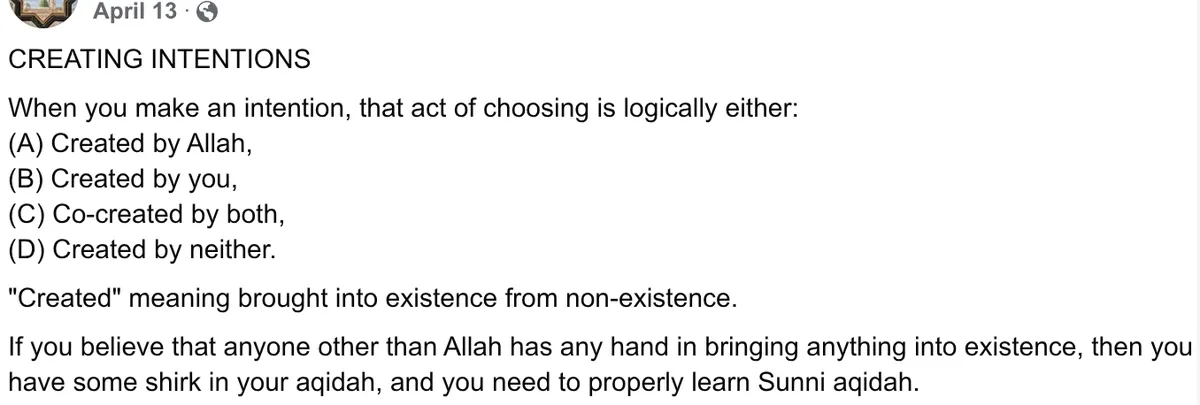
Nature of human intentions is a less explored topic than the nature of human actions in the sense that usually the discussions are more on the concept of Kasb when talking about actions of humans. Ahl al-Sunnah wa’l-Jamāʿah, specifically the Ashʿarī and Maturidi schools both posit human actions are created by Allah ﷻ Himself. Humans merely acquire their actions (Kasb) and the issue of their intention is couched inside the framework of Kasb. So I thought to find out what Imam al-Sanūsī (Imām Muḥammad ibn Yūsuf al-Sanūsī (d. 895 AH / 1490 CE)) — the quintessential Ashʿarī Imam — commented on intentions specifically. We are going to look at Imam al-Sanūsī's Sharḥ al-ʿAqīda al-Kubrā (the final book of the Sanusiyyaat — series of 5 books) where the Imam is commenting on his own matn as well as the super commentary of Sh al-Ḥāmidī (Ismāʿīl ibn Mūsā ibn ʿUthmān ibn Muḥammad ibn Jūdah al-Ḥamīdī al-Azharī d. 1316 AH/1898 CE) on Sharḥ al-ʿAqīda al-Kubrā, and some other books.
On Nature of Actions and Kasb Imam al-Sanūsī firmly establishes the Ashʿarī position that Allah ﷻ is the sole Creator of all contingent beings, and this explicitly includes the actions of servants. He states in his Sharḥ al-Kubrā (p. 443):
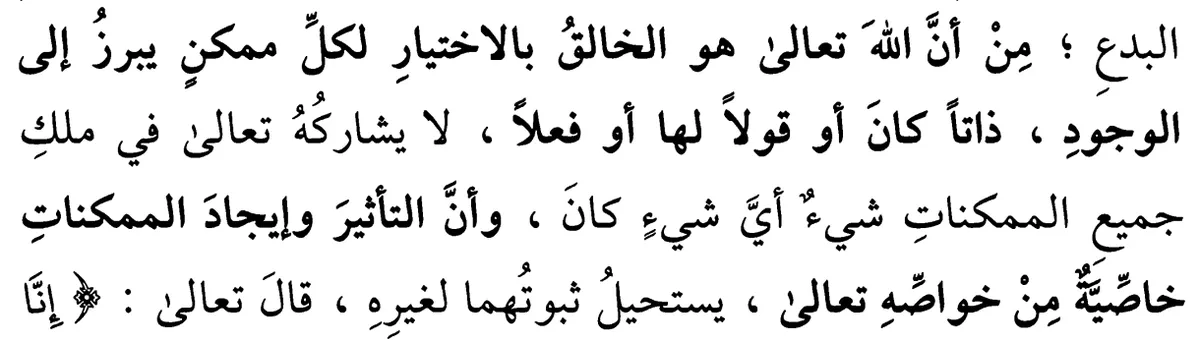
أنَّ الله تعالى هو الخالق بالاختيار لكل ممكن يبرز إلى الوجودِ ، ذاتاً كان أو قولاً لها أو فعلاً ، لا يشاركه تعالى في ملك الممكنات شيءٌ أي شيءٍ كانَ ، وأنَّ التأثير وإيجاد الممكنات خاصَّيَّةٌ مِنْ خواصهِ تعالى
This means Allah ﷻ is the Creator, by choice, of every contingent being that emerges into existence – whether it be an essence, a property, or an action. Nothing whatsoever shares with Him in the dominion over contingent beings, and effecting (التأثير) i.e. bringing contingent beings into existence (إيجاد الممكنات) are exclusive properties of His.
But if Allah ﷻ creates our actions, what is then our role? To answer this question, Imam al-Sanūsī first establishes the existence of qudra haditha (القدرة الحادثة). Understanding the necessity of affirming القدرة الحادثة is crucial to distinguish the Ashʿarī view from that of the Jabriyyah (extreme determinists) who deny any and all human power/agency. Imam al-Sanūsī explains that we affirm this created human power primarily because of the undeniable, self-evident difference we all experience between actions that feel chosen and those that feel compelled. He says (p. 450):
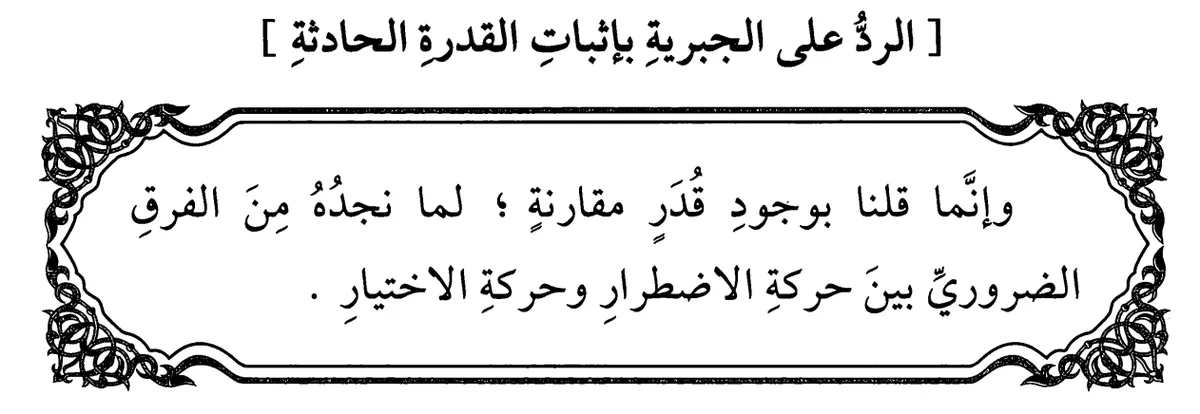
وإنَّما قلنا بوجودِ قُدَر مقارنة ؛ لما نجدهُ مِنَ الفرقِ الضروري بين حركة الاضطرار وحركة الاختيار
"We affirm the existence of concomitant powers (قُدَر مقارنة) because of the necessary difference (الفرقِ الضروري) we find between involuntary movement (حركة الاضطرار) and voluntary movement (حركة الاختيار)."
The experience of consciously deciding to do something is vastly different from an involuntary tremor. He argues that this perceived difference cannot be attributed merely to the movements themselves as they might be physically identical, nor to the essence of the moving person which remains the same. Therefore, the difference must be due to an additional quality (صفة زائدة) in the person associated with the voluntary action, and this quality is what the Ashʿarīs term القدرة الحادثة. Denying it, as the Jabriyyah do, means denying the self-evident (جَحْدِ الضرورة) and undermining the very basis of legal responsibility (إبطالِ محلّ التكليف) (p. 457).
To contextualize the Ashʿarī position on human power (القدرة الحادثة), Imam al-Sanūsī (p. 447-448) summarizes the five main views on it:
- Imam Al-Ashʿarī: Human power has no effect at all; it's merely concomitant with God's creation of the action.
أنَّ قدرة العبدِ لا تأثير لها ألبتة ، وإنَّما هي مقارنة لمقدورها فقط
- Imām al-Ḥaramayn al-Juwaynī: Human power does have an effect, but according to measures God has determined. (Imam al-Sanūsī does express his doubt whether the attribution of this view to Imam Juwani is correct)
أنَّ القدرة الحادثة تُؤثر في وجود الفعل على أقدارٍ قدَّرَها البارى تعالى
- Qadi al-Baqillani: Human power affects the most specific quality of the act, not its existence.
أَنَّها تؤثر في أخص وصفِ الفعل ، لا في وجوده
- Jabriyyah (Determinists): Humans have no power at all.
أنَّهُ لا قدرة أصلاً
- Qadariyyah (Mu'tazila): Human power affects the action's existence independently.
أنَّ القدرة الحادثة تؤثر في وجودِ الفعل على سبيل الاستقلال
Imam al-Sanūsī considers all but the first to be invalid. In summary, the affirmation of القدرة الحادثة is needed because:
- It acknowledges our direct, undeniable experience of a difference between chosen and compelled acts.
- It provides a basis for understanding legal responsibility (التكليف). If there's no sense in which a human has a 'power' connected to their actions, then holding them responsible becomes conceptually very difficult.
Having established the existence of this القدرة الحادثة, we can now explore the human role in their actions which brings us to the concept of الكسب (Kasb, or acquisition). Imam al-Sanūsī explains (p. 456):
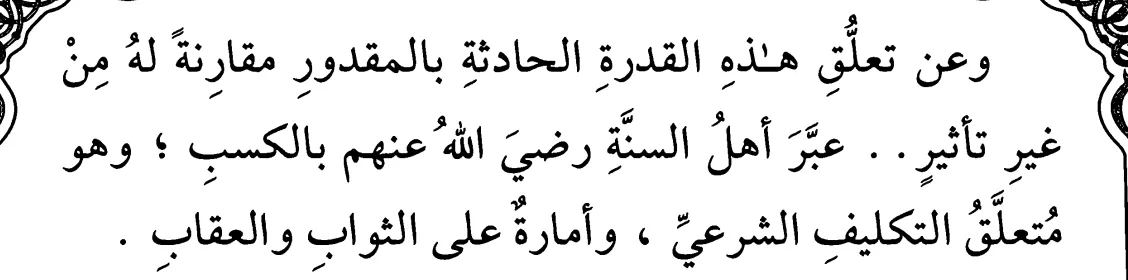
وعن تعلُّق هذه القدرة الحادثة بالمقدور مقارنةً لهُ مِنْ غير تأثير .. عبَّرَ أَهلُ السنَّةِ رضيَ الله عنهم بالكسب ؛ وهو متعلَّقُ التكليف الشرعي ، وأمارة على الثواب والعقاب
So, Ahl al-Sunnah defines the term الكسب as the connection (تعلُّق) of this originated human power (القدرة الحادثة) with the action (المقدور), a connection that is concomitant (مقارنة) with the action but without any creative effect (مِنْ غير تأثير). This الكسب is the basis of legal responsibility (التكليف الشرعي) and serves as a legal indicator (أمارة) for reward and punishment. Imam al-Taftazani, in his Sharḥ al-ʿAqāʾid (p. 399), succinctly puts it:
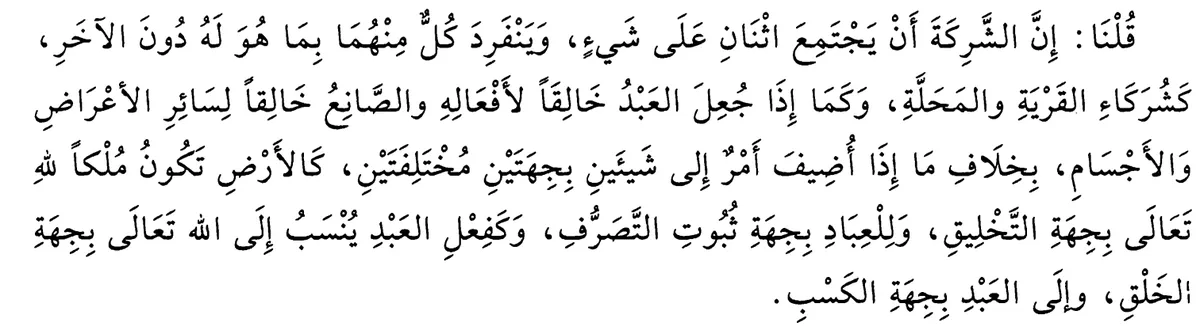
...وَكَفِعْلِ العَبْدِ يُنْسَبُ إِلَى اللَّهُ تَعَالَى بِجِهَةِ الخَلْقِ، وإلَى العَبْدِ بِجِهَةِ الكَسْبِ
Meaning, the servant's act is attributed to Allah ﷻ from the aspect of creation (الخَلْق), and to the servant from the aspect of acquisition (الكَسْب). However, Imam al-Sanūsī (p. 456) again emphasizes that this acquisition has no creative effect at all:

! وكثيراً ما يتوهَّمُ مَنْ لا علم عندَهُ أنَّ معنى الكسب كونُ القدرة الحادثة لها تأثير ما
"Many who lack knowledge imagine that الكسب means the originated human power has some creative effect" - which is incorrect according to the mainstream Ashʿarī view.
Kasb and Intention The key point regarding intention is that the wills/intentions "الإرادات" to do actions are themselves part of what Allah ﷻ supplies (يمد) to the servant. The servant's firm resolve (عزم) precedes Allah ﷻ's creation of the qudra haditha in him and the action itself, but the initial will/intention (إرادة) itself is also part of God's إمداد. As such, at first impression, it might seem that the servant has no say in their actions at all given their intentions and actions are all being created by Allah ﷻ, and this has essentially become a position of the Jabriyyah. Yet, Ashʿarīs do affirm the servant's shouldering responsibility for their actions. Imam al-Sanūsī reconciles this by (p. 468):
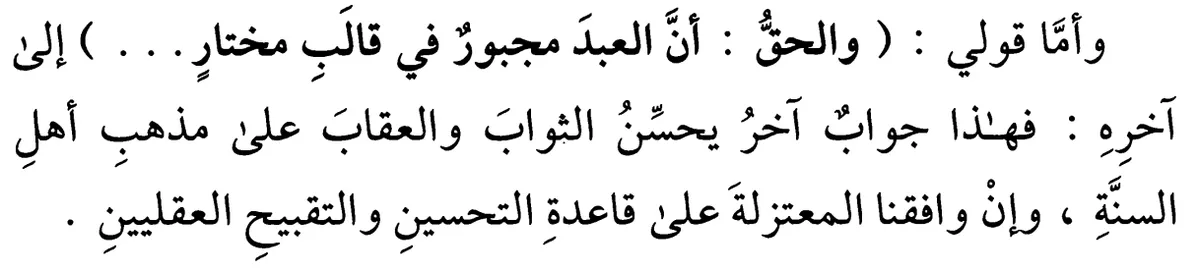
والحقُّ : أنَّ العبد مجبور في قالبِ مختارٍ . . .
"The truth is: The servant is compelled (مجبور) in the mold (قالب) of one who chooses (مختار)."
Essentially, the servant's will is under the will of Allah ﷻ, and this is presented as an answer that justifies reward and punishment according to Ahl al-Sunnah even if one were to, for argument's sake, accept the Mu'tazilite principle of determining good and evil through rational principles rather than because Allah ﷻ's assigning them of such properties (which is the Ashʿarī school's view).
The reasoning as explained by Imam al-Sanūsī (p. 468) is key here:
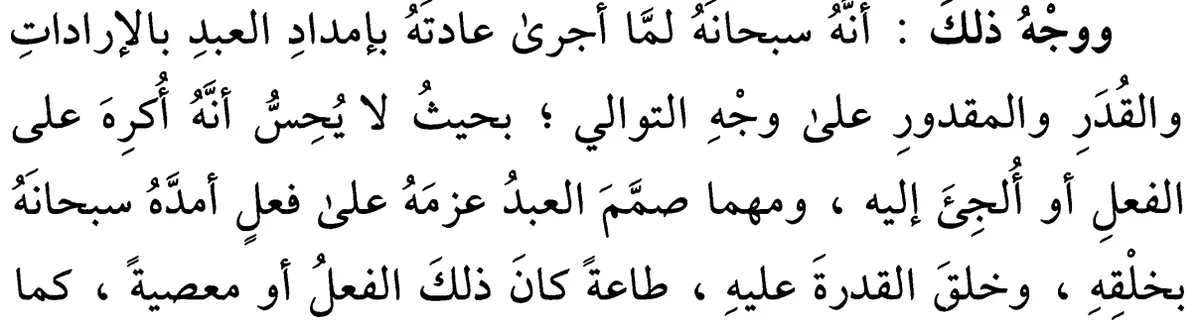
أَنَّهُ سبحانَهُ لمَّا أجرى عادتهُ بإمداد العبد بالإرادات والقُدَرِ والمقدور على وجهِ التوالي ؛ بحيثُ لا يُحِسُّ أَنَّهُ أُكرِهَ على الفعل أو أُلْجِئَ إليه ، ومهما صمَّمَ العبد عزمَهُ على فعل أمدَّهُ سبحانَهُ بخلْقِهِ ، وخلق القدرة عليهِ ، طاعةً كانَ ذلك الفعل أو معصية
"Allah (Glorified is He) has established His custom (عادتهُ) of supplying the servant with الإرادات (wills/intentions), then القُدَر (powers), and then المقدور (the object of power, i.e., the action itself) sequentially. This happens in such a way that the servant doesn't feel forced or compelled. Whenever the servant firmly resolves (صمَّمَ العبد عزمَهُ) upon an action, Allah supplies him by creating the action and the power for it. This supply (الإمداد) is linked to their will (الإرادة), as supported by Qur'anic verses [17:18-20], and is what is termed divine facilitation (التوفيق) or abandonment (الخذلان). Because of this outward appearance (بحسَبِ الظاهرِ), the servant seems to be the producer (مُوجِدٌ) of his action, so much so that perception and imagination don't doubt it."
Shaykh al-Hamidi in his hashiya (p. 360) makes the creation of both intention and action explicit when explaining this part:

( قوله وَوَجْهُ ذَلِكَ ) أَيْ كَوْنُهُ مَجْبُورًا فِي قَالَبِ مُخْتَارٍ ( قوله بِالْإِرَادَةِ الْخ ) أَيْ بِخَلْقِهِمَا فِيهِ ( قوله أَوْ أُلْجِئَ إِلَيْهِ) تَنْوِيعٌ فِي التَّعْبِيرِ ( قوله وَمَهْمَا الْخ ) عَطْفٌ عَلَى لَمَّا ، وَجَوَابُ لَمَّا مَحْذُوفٌ : أَيْ صَارَ الْعَبْدُ خَالِقًا بِحَسَبِ الظَّاهِرِ
"(His statement: "with will, etc.") i.e., by His creating them both (will and power) in him."
Imam al-Sanūsī (p. 469) then explains that because "the servant appears to be the producer (مُوجِدٌ) of his action — and this is how some interpret الكسب — then linking reward and punishment to his action is appropriate legally (شرعاً), customarily (عرفاً), and rationally (عقلاً)."
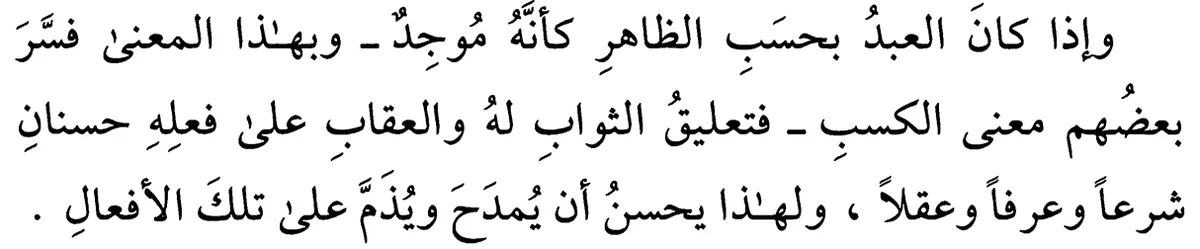
وإذا كانَ العبد بحسَبِ الظاهرِ كأنَّهُ مُوجِدٌ - وبهذا المعنى فسَّرَ بعضُهم معنى الكسب - فتعليقُ الثواب لهُ والعقاب على فعله حسنانِ شرعاً وعرفاً وعقلاً ، ولهذا يحسن أن يُمدَحَ ويُذَمَّ على تلك الأفعالِ
However, when looking at the inner reality (الباطن), the servant's action is not a cause (سبب) for anything, unless 'cause' is taken to mean a 'legal indicator' (أمارة شرعيَّة).
وأمَّا إن نظرنا إلى الباطن وإلى حقيقة الأمرِ . . لم يصح جعلُ فعلِهِ سبباً لشيء ، اللهم إلا أنْ يُطلَقَ عليهِ لفظُ السبب بمعنى الأمارة الشرعيَّةِ فصحيح ، وقد جاءَ القرآنُ والسنَّةُ بملاحظة الأفعال تارةً ؛ نحو : ﴿ ادْخُلُوا الْجَنَّةَ بِمَا كُنتُمْ تَعْمَلُونَ ﴾ [النحل : ٣٢] ونحوه ، وتارةً بلغوه نحو : « لَا يَدْخُلُ الْجَنَّةَ أَحَدٌ بِعَمَلِهِ »(۱) ، ولعله لملاحظة الأمرين : الجبرِ بحسب ما في نفس الأمرِ ، والاختيار بحسَبِ الظاهرِ وعُرْفِ التخاطب
"However, if we look at the inward reality (al-bāṭin) and the true nature of the matter, it is not valid to make his action a cause (sabab) for anything – unless the term 'cause' is applied to it in the sense of a 'legal indicator' (amārah shar‘iyyah), in which case it is correct. The Qur'an and Sunnah have come sometimes noting the actions, such as: {Enter Paradise for what you used to do} [Qur'an 16:32] and similar verses; and sometimes negating this, such as: 'No one enters Paradise by his deeds.'(1) Perhaps this is due to considering both aspects: compulsion (jabr) according to the reality of the matter, and choice (ikhtiyār) according to outward appearance and the custom of discourse."
(1) Narrated by al-Bukhārī (5673) and Muslim (2816) from the hadith of our master Abū Hurayrah, may God be pleased with him.
The fact that actions done with our created power and will lead to reward or punishment is because God decreed it so. These actions become "indicators" (أمارات - amarat) or signs for reward/punishment by divine convention (جعليَّة - ja'liyyah), not because of some inherent rational necessity that links the act to a specific consequence without God's decree.
Therefore, the Ashʿarī position, as articulated by Imam al-Sanūsī, is that Allah ﷻ creates the servant's intention (إرادة), the power (قدرة) to act upon that intention, and the action (مقدور) itself. The servant "acquires" (يكتسب) this action through the concomitance of his created power with the created action, all initiated by a divinely supplied will, giving us the experience of choosing which makes us responsible.
And Allah ﷻ knows best.
Note on Responsibility and Imam al-Farhārī On the account of us being responsible for our actions, while our will to do the action, power to do the action and the action itself is being created by Allah ﷻ, admittedly, is not something intuitive to grasp. So I was looking into the famous hashiya of Sharḥ al-ʿAqāʾid, Al-Nibrās by Imam al-Farhārī. Imam al-Farhārī, being the great thinker he is, wrote something that finally hit the point home for me which also does not conflict or contradict with Imam al-Sanūsī's explanation. One of the objections against Kasb in the guise of false dichotomies is, as our intention/will to do an action is a Ṣifah ḥādithah (originated/created attribute), if it is created by the human himself, then that results in an infinite regress as that intention to create the action itself will require another intention and as such. But if it is created by Allah ﷻ, then that requires determinism/compulsion as the human does not have any choice over his actions anymore. Imam al-Farhārī refutes this (p. 380) by pointing that our intentions being created does not necessitate compulsion in the subsequent actions from those intentions just as Allah ﷻ's attributes of Will (إرادة) and Power (قدرة) are not subject to choice i.e., they are His necessary attributes (they must exist) but Allah ﷻ's actions are from Him by His choice. This conceptualization of the masʾalah arguably makes the case of us being responsibile for our actions more intuitive to grasp.
أولًا: أنَّ تعلُّق الإرادة بأحد المقدورين لا بد أن يكون لمرجح يرجح أحدهما، فهذا المرجح إن كان من الله .. لزم الجبر، أو من العبد لزم استقلاله في خلق بعض أفعاله. وأجيب: بأنَّ الإرادة صفة شأنها من ترجیح أحد المقدورين بلا مرجح، كما سبق في بحث إرادة الحق سبحانه. [٢] وثانيًا: أنَّ الإرادة صفة حادثة، فحدوثها إن كان بإرادة العبد .. لزم التسلسل، أو بإرادة الله لزم الجبر. أجيب: باختيار الثاني، وأنَّ كون العبد مجبورًا في نفس تلك الصفة لا يستلزم الجبر في الأفعال، كما أنَّ القدرة والإرادة القديمتين لا اختيار للصَّانع تعالى في وجودها، مع أن أفعاله صادرة عنه بالاختيار
References:
- al-Sanūsī, Abū ʿAbd Allāh Muḥammad ibn Yūsuf ibn ʿUmar. Sharḥ al-ʿAqīdah al-Kubrā, al-musammā ʿUmdat Ahl al-Tawfīq wa-l-Tasdīd. Verified by Anas Muḥammad ʿAdnān al-Sharfāwī. Damascus: Dār al-Taqwā, [n.d.].
- al-Majmūʿa al-Thāniya ʿalā Sharḥ al-ʿAqāʾid al-Nasafiyya (li-Ramaḍān Afandī, al-Kastalī, wa-al-Khayālī). Edited by Murʿī al-Rashīd. 1st ed. Beirut: Dār Nūr al-Ṣabāḥ (Nursabah), 2012.
- al-Farhārī, Abū ʿAbd al-Raḥmān ʿAbd al-ʿAzīz ibn Aḥmad ibn al-Ḥāmid. Al-Nibrās: Sharḥ al-ʿAqāʾid al-Nasafiyya. Edited by Awqān Qadīr Yılmaz (ʿAbd al-Qādir). 1st ed. Istanbul: Maktabat Yāsīn, 2012.
- al-Ḥāmidī, Ismāʿīl ibn Mūsā ibn ʿUthmān. Ḥawāshī ʿalā Sharḥ al-Kubrā lil-Sanūsī. 1st ed. Cairo: Maṭbaʿat Muṣṭafā al-Bābī al-Ḥalabī wa Awlādihi, 1936.
note All page numbers referenced in the essay are the pdf page numbers of the above mentioned texts (not the page number that is shown on the page in the pdf).
Thanks Thanks to my dear teacher and friend Sh Imran Ahmed (His telegram) for reading a draft of this and offering corrections and modifications.